
GEO vs SEO: How to Get Your Website Cited by AI Search
 Written by Dipendra Guragain
AI search tools answer questions directly instead of listing links. Here is how GEO differs from SEO, and what to change so your pages get cited.

Search is changing. People still type queries into Google, but more of them now read an AI-generated answer and never click a link. That shift has created a second goal alongside ranking: getting your content quoted inside the answer.
SEO is about earning a position in a list of results. GEO, or generative engine optimization, is about making a passage on your page easy for an AI system to extract, trust and cite. The two share the same foundations: crawlable pages, fast loading, clear headings and genuinely useful content.
Where GEO differs is in how you write. Put the answer in the first sentence instead of building up to it. Phrase headings as the questions people actually ask. Back claims with named, checkable sources, because a statement with a source is quotable and one without is easy to skip.
Consistency matters too. AI systems build a picture of who you are from every page they read, so keep your name, services and location identical everywhere, and use structured data that describes your business accurately.
You do not need to abandon SEO. Keep the technical and content basics, then add a short answer passage to each important page, cite your numbers, and define the terms you use. Start with your top five pages and improve them one at a time.
GEO, or generative engine optimization, is the practice of structuring your content so AI search tools can find, understand and cite it in their answers. SEO aims to rank a page in a list of links; GEO aims to have a passage quoted inside the answer itself. The two overlap heavily, because AI tools still rely on crawlable, fast, well-structured pages. The difference is in the writing. GEO favours a direct answer in the first sentence, claims backed by named sources, clear headings phrased as questions, and consistent facts about who you are and what you do. A practical approach is to keep your SEO foundations, then add a concise answer passage to each important page, cite checkable statistics, and use structured data that describes your business accurately. Treat GEO as an extension of good SEO rather than a replacement for it.
Is GEO replacing SEO?
No. GEO builds on SEO. AI search tools still depend on pages that are crawlable, fast and well structured, so SEO fundamentals remain the foundation. GEO adds writing and markup choices that make a passage easy to quote.
What is an answer passage?
An answer passage is a short, self-contained block of text, usually 134 to 167 words, whose first sentence directly answers the page’s main question. It is written to be lifted out of the page whole.
Do I need special software for GEO?
No. The core work is editorial: answer first, cite sources, use question-style headings and keep your business details consistent across pages.
Related Articles
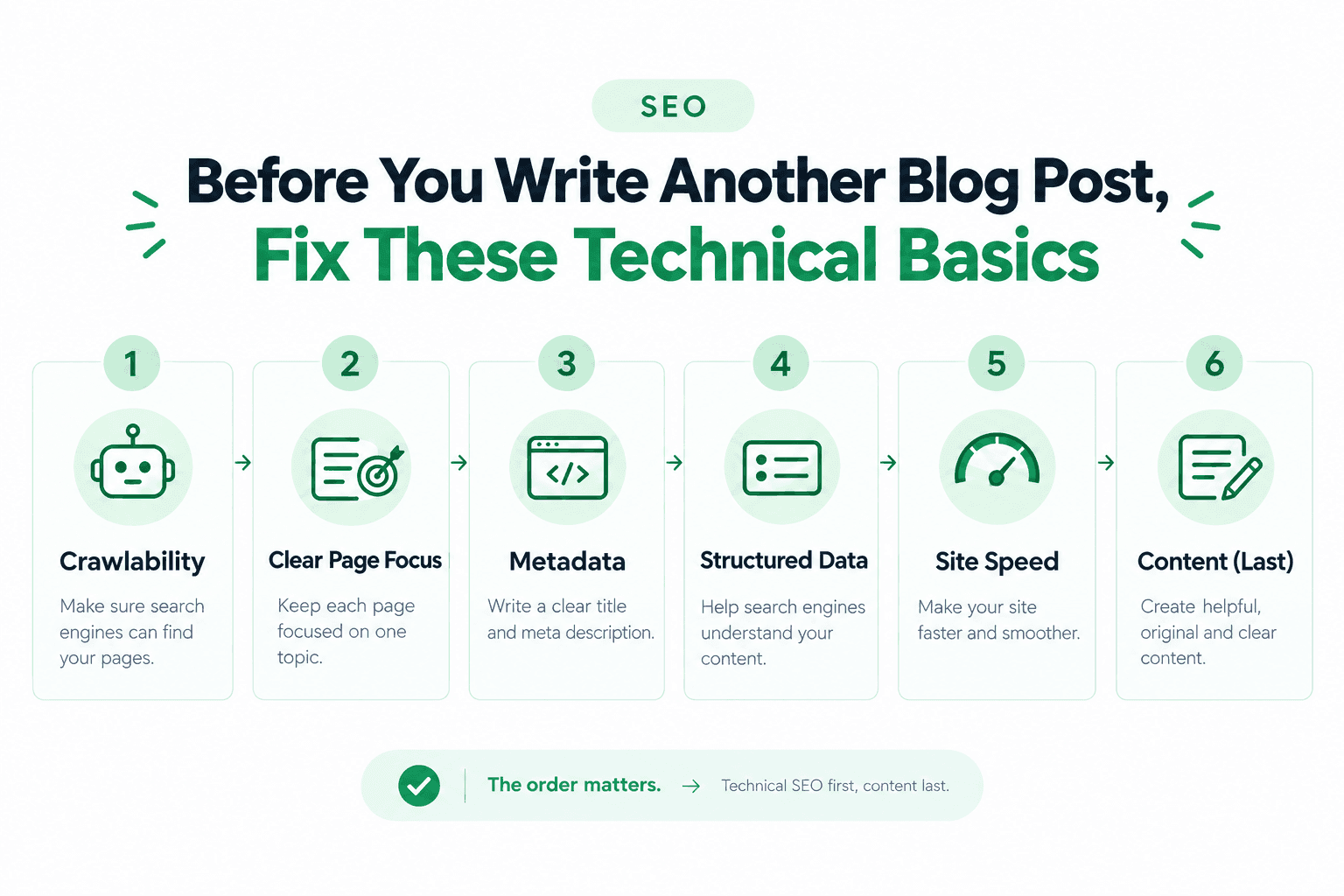
Before You Write Another Blog Post, Fix These Technical Basics
Sites that "need more content" usually need their existing pages to be crawlable, fast and unambiguous first. Here is the order I check things in, and why content comes last.
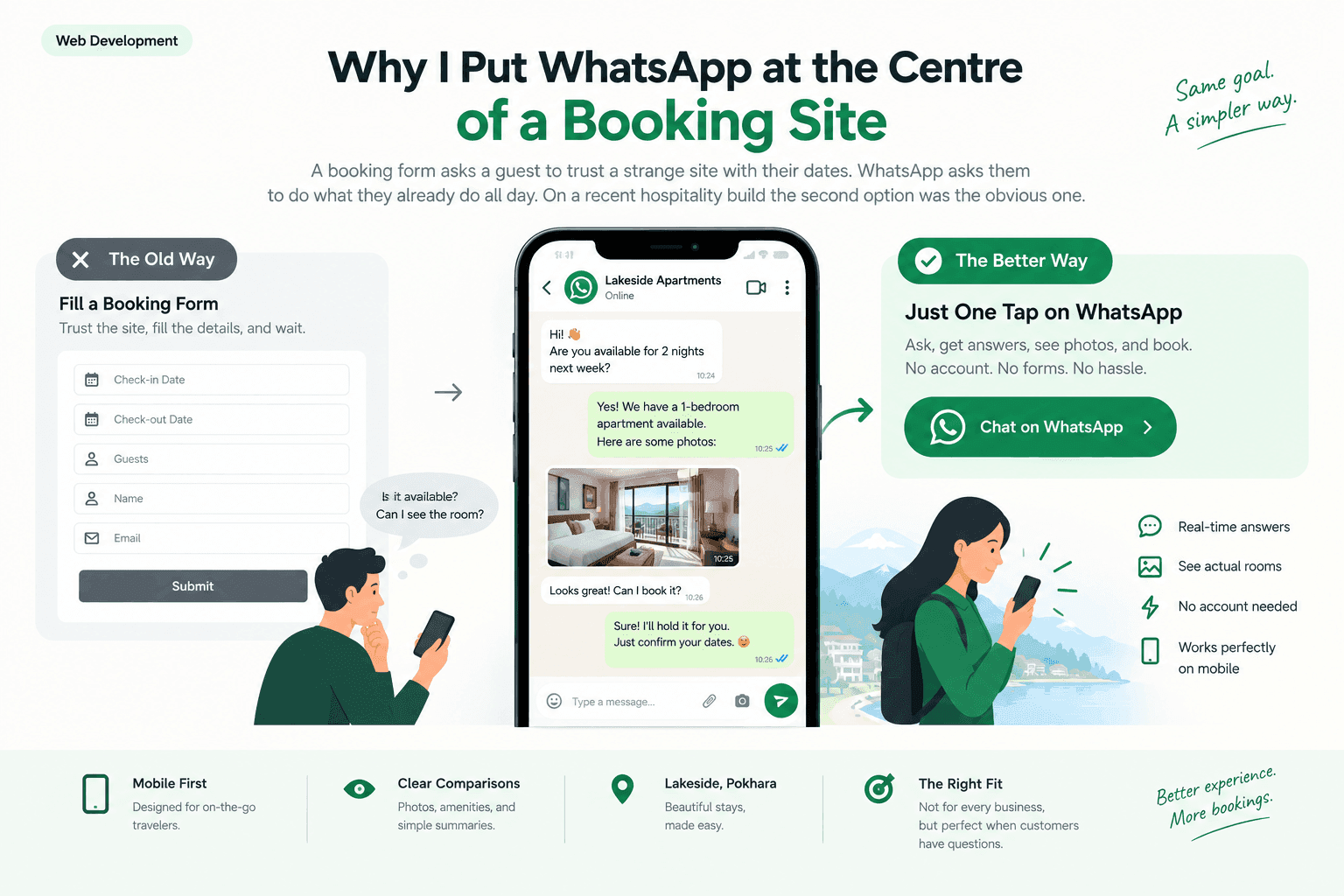
Why I Put WhatsApp at the Centre of a Booking Site
A booking form asks a guest to trust a strange site with their dates. WhatsApp asks them to do what they already do all day. On a recent hospitality build the second option was the obvious one.