
Why I Put WhatsApp at the Centre of a Booking Site
A booking form asks a guest to trust a strange site with their dates. WhatsApp asks them to do what they already do all day. On a recent hospitality build the second option was the obvious one.
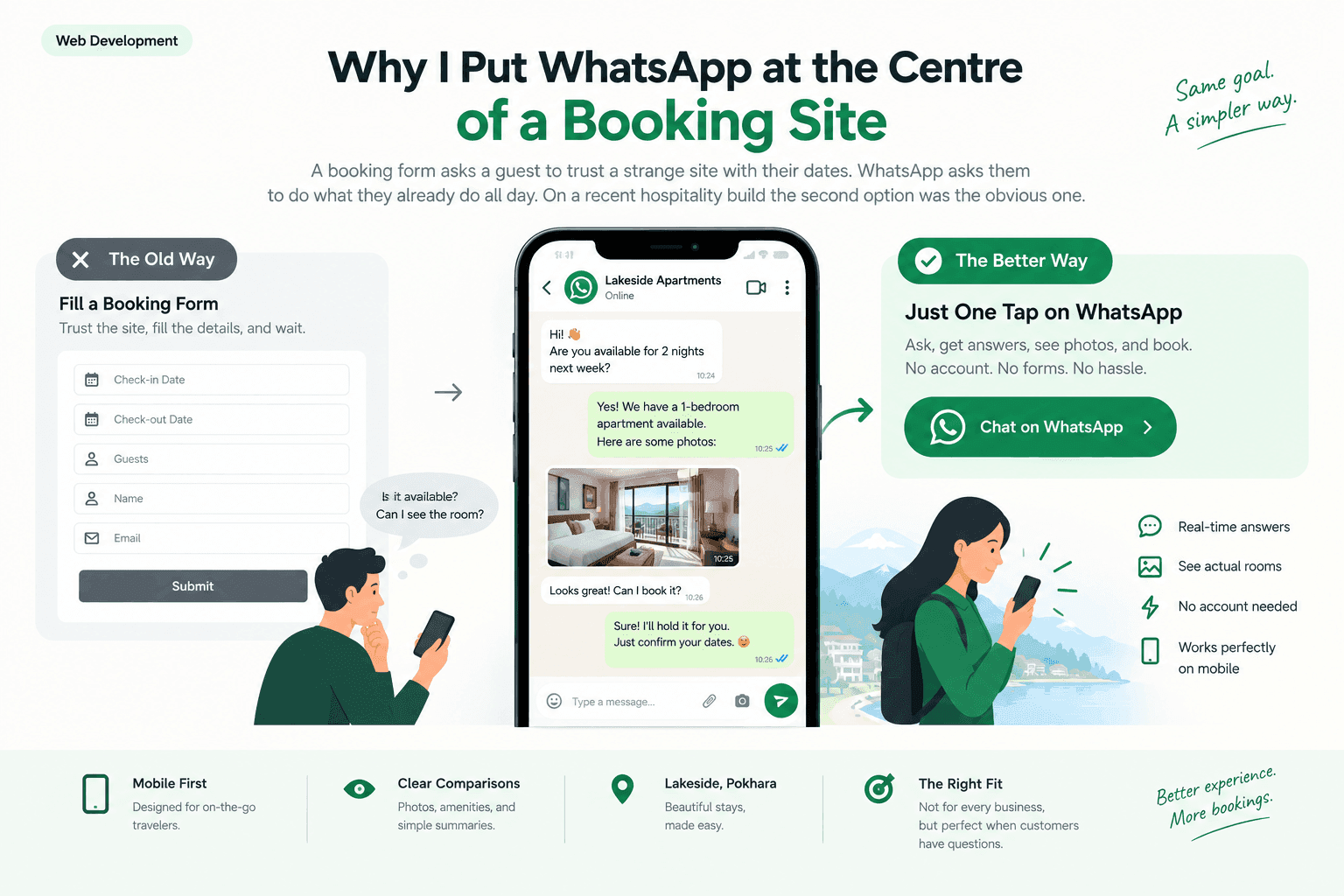
The brief was a booking website for a serviced apartment residence in Lakeside, Pokhara, and the first wireframe I drew had a form on it. Dates, guests, name, email, submit. That is what booking websites look like.
Then I thought about who actually books a short stay in a place like that. They are on a phone, often already travelling or about to, and they have a question a form cannot answer: is the room I am looking at free on the dates I want, and can I see the actual room first?
A form hides behind a submit button. You fill it in, you wait, and you find out later. WhatsApp is a conversation. You ask, someone answers, and they can send you a photo of the room.
So the reservation path became a single tap. No account, no email confirmation loop, no form validation errors on a phone keyboard at eleven at night.
That decision shaped the rest of the build. If the enquiry happens in a chat, the site has one job: get someone to that tap with enough confidence to make it. Which means the apartments have to be comparable without clicking through, so three types sit side by side with their own photographs, a plain-language summary, the amenities that matter, and a from-price per night.
Mobile-first stopped being a slogan and became the layout constraint. Photographs sized for a phone screen, an amenities section that scans, a gallery, and a booking button that stays reachable as you scroll.
Not every business should do this. Sell something with a fixed price and no variables and a checkout will always beat a conversation. But anywhere the customer has a question before they commit, moving that conversation earlier in the flow is usually the right call.
Related Articles
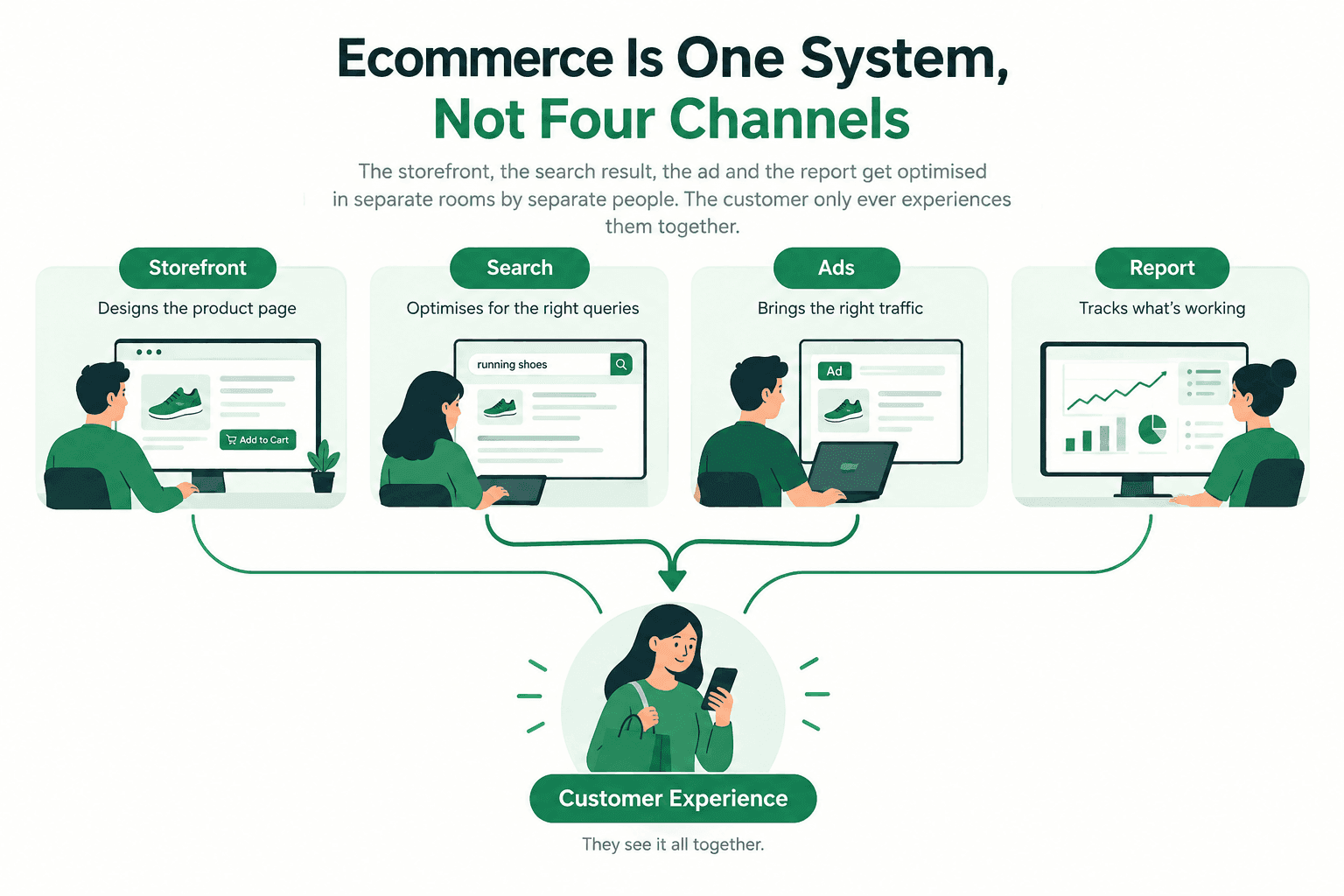
Ecommerce Is One System, Not Four Channels
The storefront, the search result, the ad and the report get optimised in separate rooms by separate people. The customer only ever experiences them together.
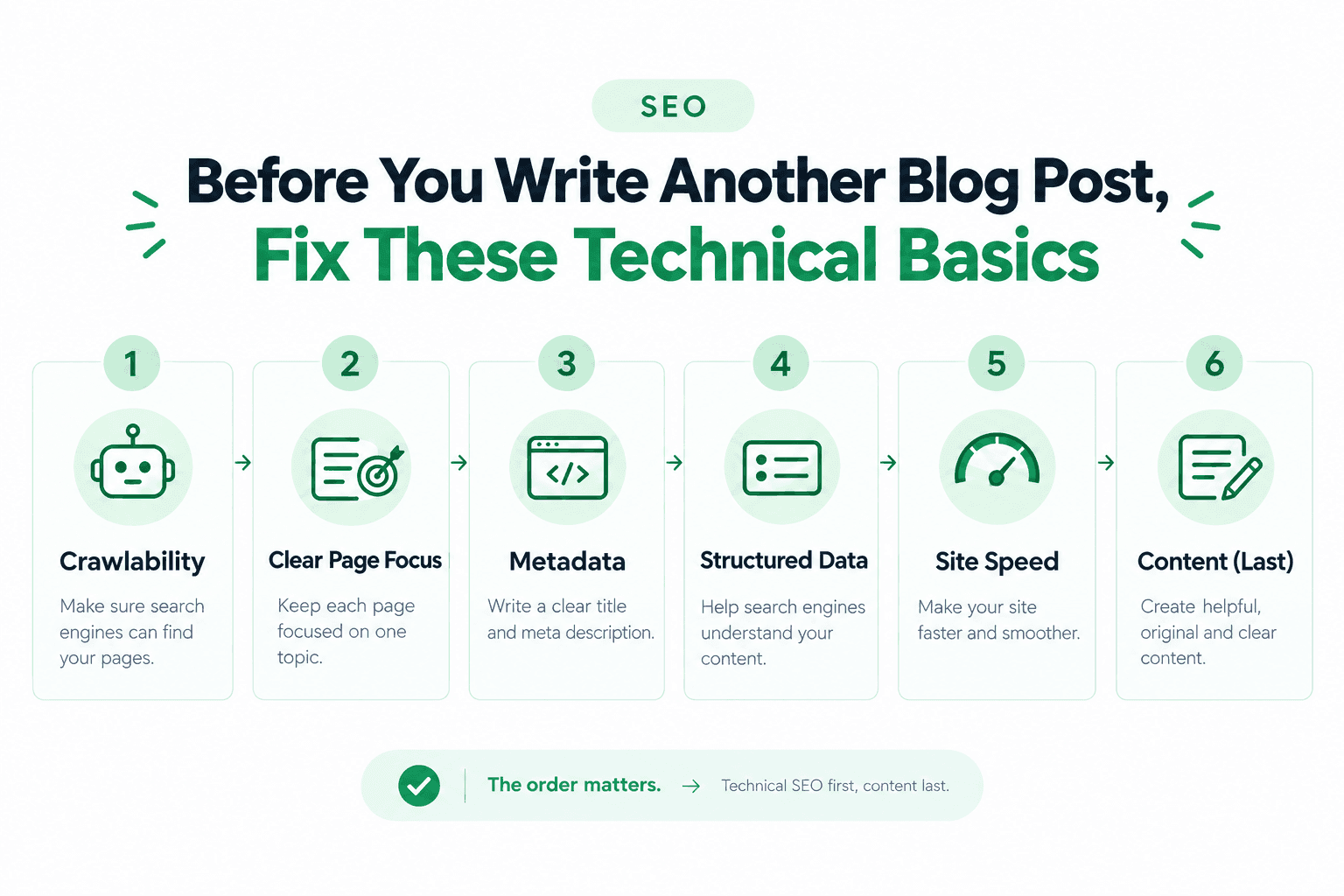
Before You Write Another Blog Post, Fix These Technical Basics
Sites that "need more content" usually need their existing pages to be crawlable, fast and unambiguous first. Here is the order I check things in, and why content comes last.