
Ecommerce Is One System, Not Four Channels
The storefront, the search result, the ad and the report get optimised in separate rooms by separate people. The customer only ever experiences them together.
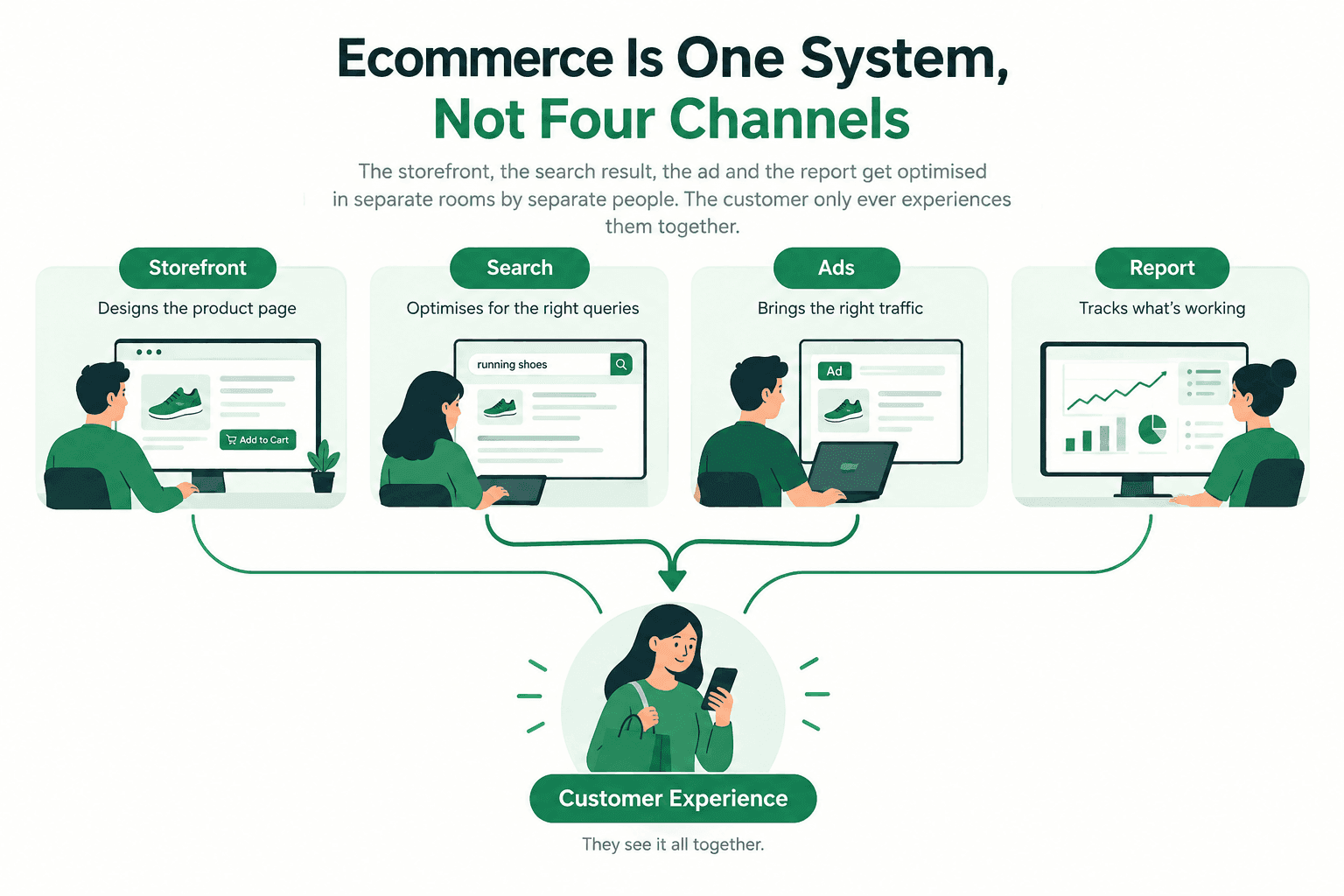
Most ecommerce problems arrive described as one problem. Traffic is down. Conversion is down. Ad costs are up. In practice they are usually the same problem wearing different hats.
Take a product page that loads in four seconds on mobile. The SEO person sees a Core Web Vitals issue. The ads person sees a landing page with a high bounce rate and blames the audience. The merchandiser sees a product nobody buys. All three are looking at the same page and none of them are wrong, which is exactly why nobody fixes it.
So I try to hold the whole funnel in one view, from the first search to the repeat order, and ask where the drop actually happens. Sometimes it is the page. Sometimes it is the query that brought them there, which means the page is promising something the product does not deliver.
The useful questions are unglamorous. Which products get views but no carts? Which queries land on a page that does not answer them? Which ad sends traffic to a category page when the customer wanted one specific item? Those answers usually point at a fix that costs nothing to ship.
Analytics has to be trustworthy before any of this works. If the purchase event fires twice, or never fires on mobile, every decision downstream is made against a number that is wrong. I would rather spend a week fixing tracking than a month optimising against bad data.
None of this is a channel strategy. It is just refusing to treat the storefront, the search result, the ad and the report as separate businesses, because the customer never does.
Related Articles
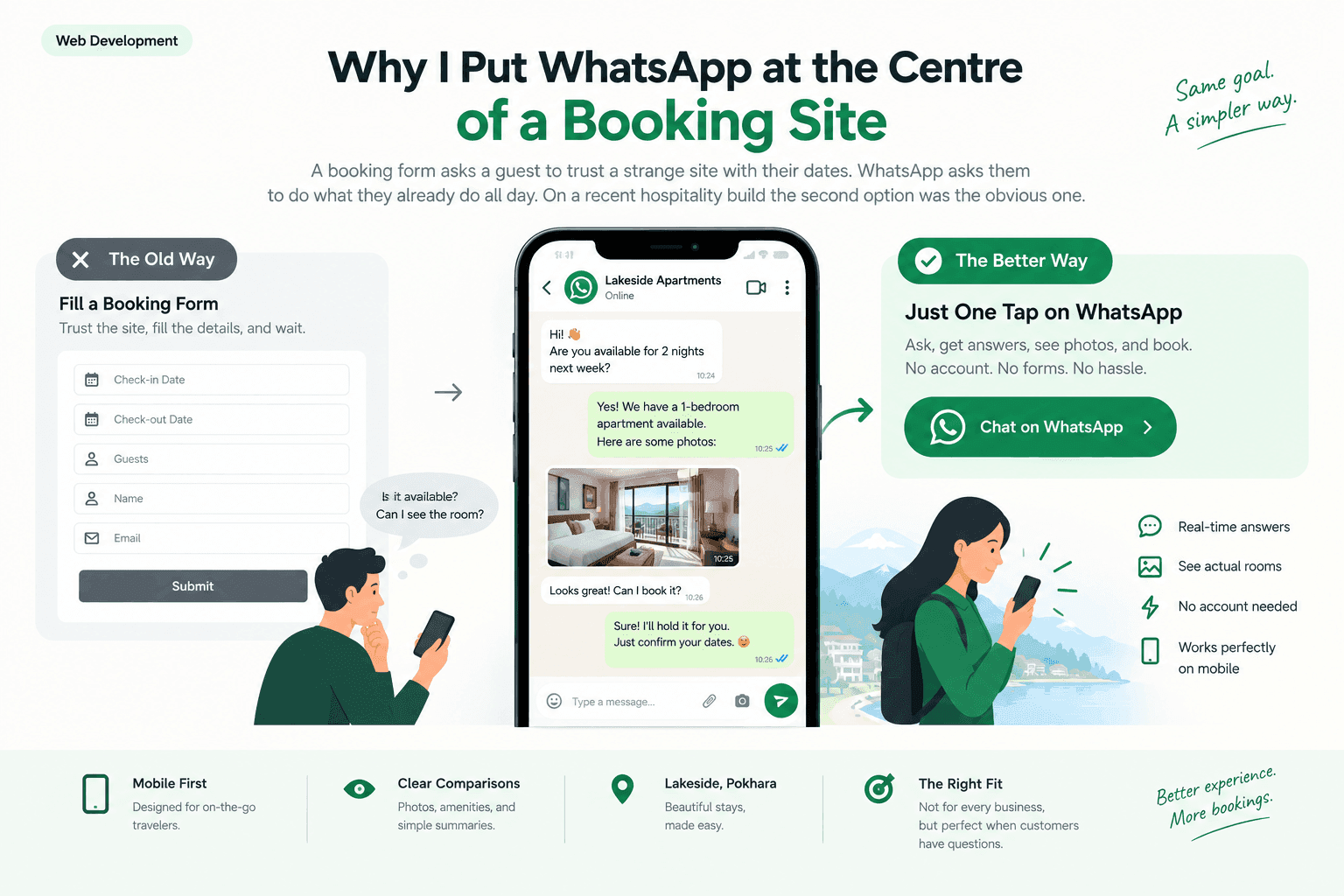
Why I Put WhatsApp at the Centre of a Booking Site
A booking form asks a guest to trust a strange site with their dates. WhatsApp asks them to do what they already do all day. On a recent hospitality build the second option was the obvious one.
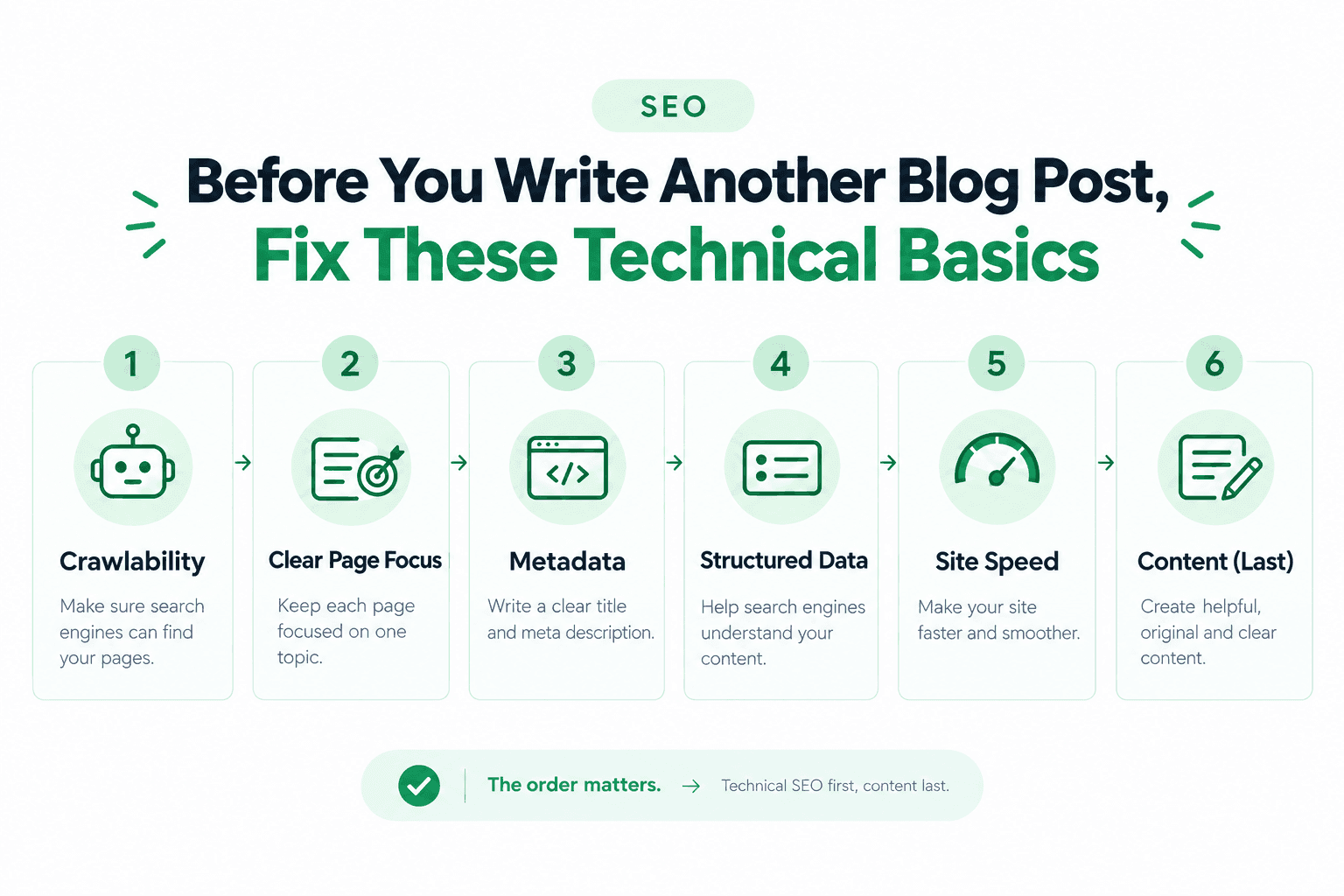
Before You Write Another Blog Post, Fix These Technical Basics
Sites that "need more content" usually need their existing pages to be crawlable, fast and unambiguous first. Here is the order I check things in, and why content comes last.